10S Li-ion BMS
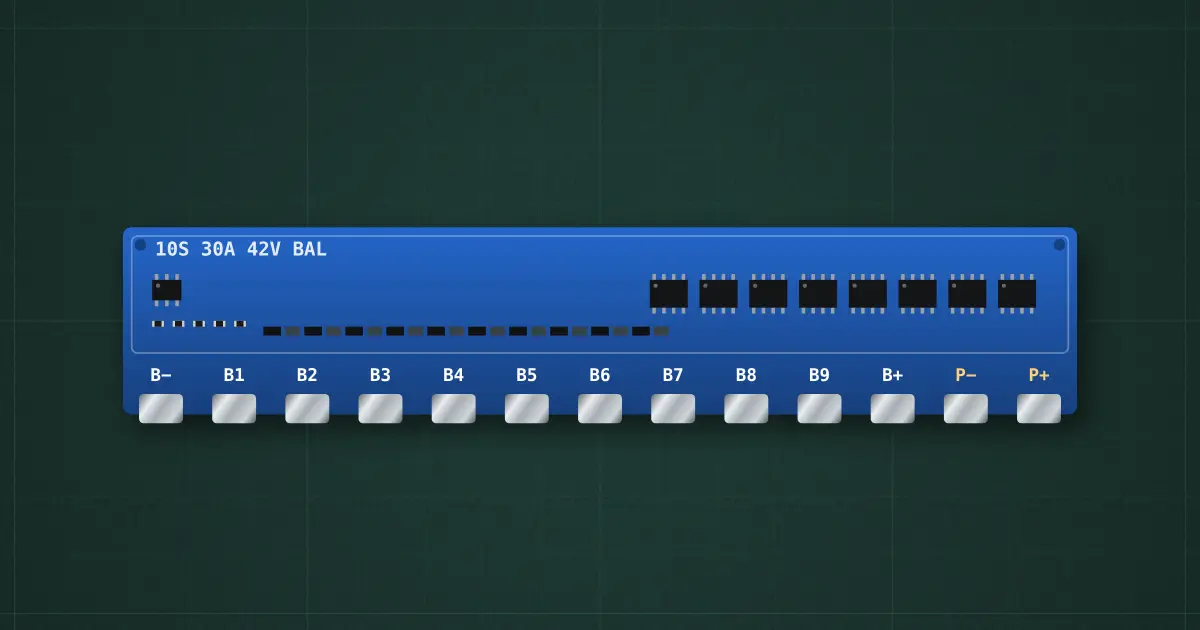
Daly 10S 30 A common-port · 10S Li-ion · 30 A continuous, trips at about 90 A (1 ms), short circuit about 180 A (250 µs) · over-charge 4.25 V/cell (42.50 V pack), over-discharge 2.7 V/cell (27.0 V pack) · balancing 30 mA from 4.18 V
Try it on the benchThe lab drops it on an empty bench and opens its datasheet card.
Typical part: 10S Li-ion BMS — modelled on Daly 10S 30 A common-port
Pins
- B−
- B1
- B2
- B3
- B4
- B5
- B6
- B7
- B8
- B9
- B+
- P−
- P+
Ratings and limits
| Protection | Daly standard Li-ion BMS |
|---|---|
| Cells | 10S Li-ion |
| Over-charge | 4.25 V per cell after 1 s · release 4.15 V |
| Over-discharge | 2.7 V per cell after 1 s · release: connect a charger (or the cells recover above 3 V) |
| Discharge current | 30 A continuous · over-current trip about 90 A after 1 ms |
| Short circuit | about 180 A · 250 µs · release: remove the load |
| MOSFET resistance | 5.0 mΩ (150 mV and 4.5 W at 30 A) |
| Balancing | passive, 30 mA from 4.18 V |
| Temperature protection | none: above its continuous rating it heats, and its MOSFETs can fail shorted |
How to use it
Wire B− to the pack’s negative end, B1…B9 to each junction between cells in order, B+ to the positive end. The load and charger go on P+ and P−: the board switches the negative side with back-to-back MOSFETs. Connect the balance leads in order, B− first: a lead connected out of order can destroy the board.