12,000 mAh LiFePO4 power bank · 2 × 32700
12,000 mAh, 5 V 2.4 A USB out, 2 A USB charging, full protection. 2 32700 LiFePO4 cells in parallel (1S2P) make one big 3.2 V cell of 12,000 mAh (38 Wh). A LiFePO4 protection board guards it: over-charge 3.75 V, over-discharge 2.1 V, over-current and short circuit. A 2 A charger fills it to 3.6 V from USB, and a 5 V 2.4 A boost module powers the phone, cutting off at 2.7 V so the cells are never run flat.
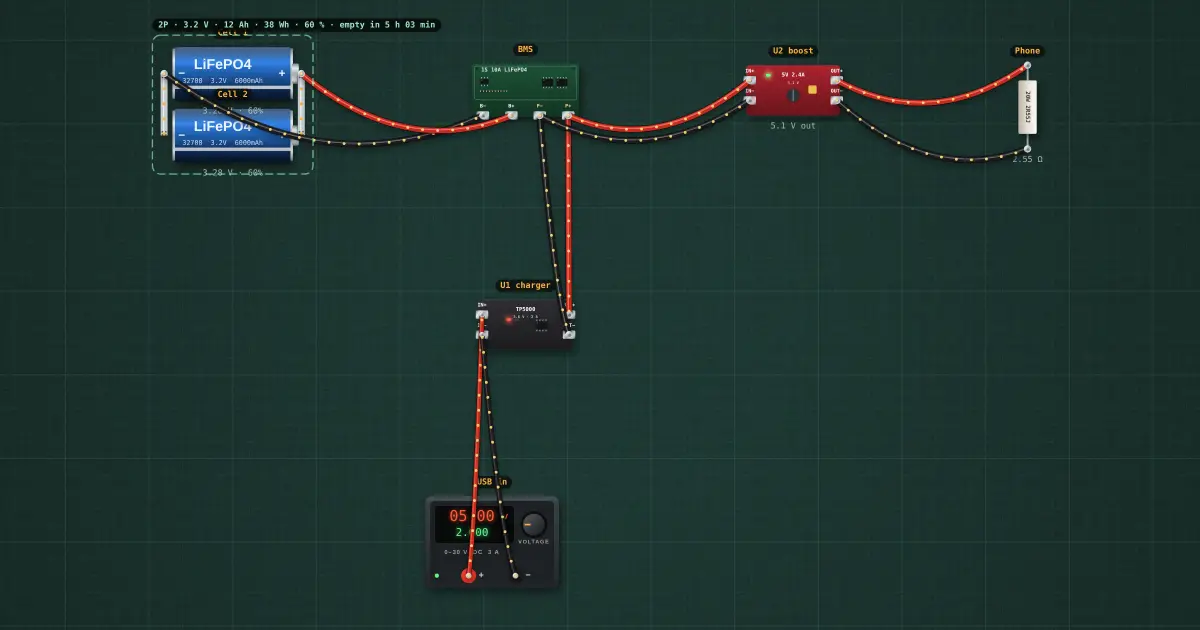
Build it in the labGuided build, test sheet and fault finding, free in your browser.
Parts list
- 2 × LiFePO4 cell
- 1S LiFePO4 protection board
- TP5000 charger module
- Bench power supply
- Power-bank boost module
- Resistor
Test procedure
Each test has an expected value and a pass range, like a factory test sheet:
- USB output at 2 A, on battery
- Charge current, USB in, nothing plugged into the output
- Charger stops at full
- Over-charge protection: a faulty 5 V charger wired straight to the pack
- Over-discharge cut-off: empty pack, phone still plugged in
- Short-circuit protection: pack shorted inside the case
- Rated capacity (sum of the cells)
How it works
What it does: 12,000 mAh, 5 V 2.4 A USB out, 2 A USB charging, full protection.
Build it (guided or ready-made), then run its test procedure below. Every test has an expected value and a pass range, just like a factory test sheet.
Background
Power banks are rated by the cells' capacity at 3.2 V. At 5 V, after the boost converter's losses, you get about 6,528 mAh: that is why a "10,000" bank never gives a phone 10,000 mAh. LiFePO4 cells store less energy per kilogram than Li-ion but last thousands of cycles and do not catch fire when abused.