1S LiFePO4 protection board
1S 3.2 V 10 A LiFePO4 board (trips at 16 A) · 1S LiFePO4 · 10 A continuous, trips at about 16 A (10 ms), short circuit about 80 A (300 µs) · over-charge 3.75 V/cell (3.75 V pack), over-discharge 2.1 V/cell (2.1 V pack) · no balancing
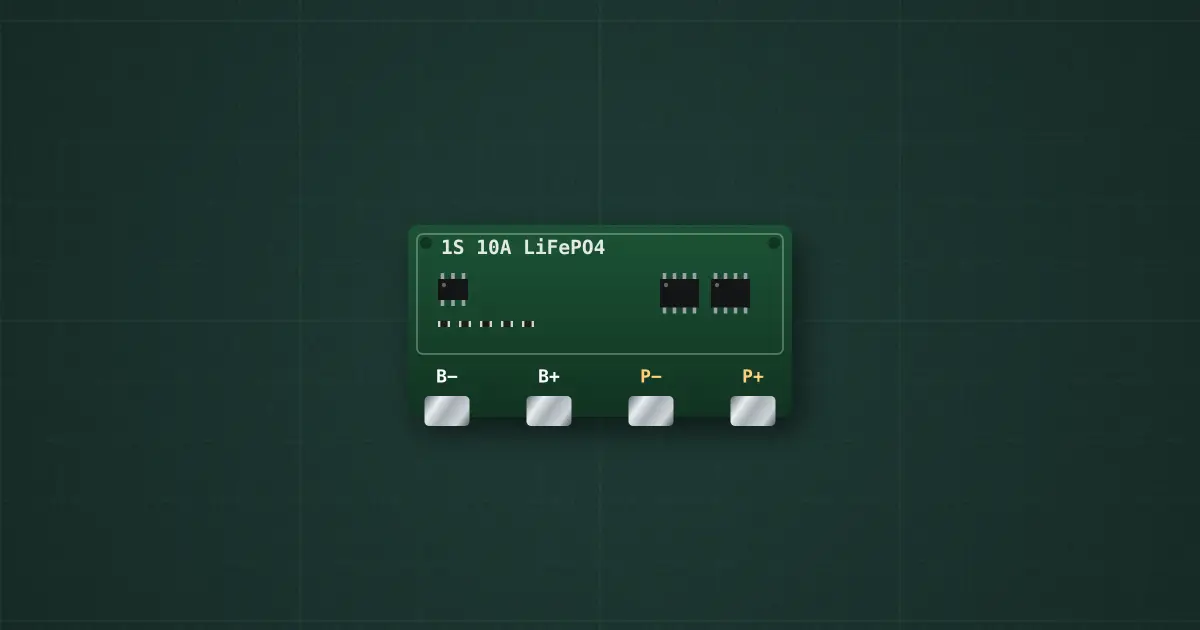
Try it on the benchThe lab drops it on an empty bench and opens its datasheet card.
Typical part: 1S LiFePO4 protection board — modelled on 1S 3.2 V 10 A LiFePO4 board (trips at 16 A)
Pins
- B−
- B+
- P−
- P+
Ratings and limits
| Protection | LiFePO4 protection IC (HY2112 type) + MOSFETs |
|---|---|
| Cells | 1S LiFePO4 |
| Over-charge | 3.75 V per cell after 1 s · release 3.6 V |
| Over-discharge | 2.1 V per cell after 100 ms · release: connect a charger (or the cells recover above 2.6 V) |
| Discharge current | 10 A continuous · over-current trip about 16 A after 10 ms |
| Short circuit | about 80 A · 300 µs · release: remove the load |
| MOSFET resistance | 10 mΩ (100 mV and 1 W at 10 A) |
| Balancing | none |
| Temperature protection | none: above its continuous rating it heats, and its MOSFETs can fail shorted |
How to use it
The LiFePO4 version of the DW01 board. A Li-ion board would let a LiFePO4 cell be charged to 4.25 V and ruin it: the protection IC must match the chemistry.
Lessons and builds that use it
- 12,000 mAh LiFePO4 power bank · 2 × 32700 (build)
- 24,000 mAh LiFePO4 power bank · 4 × 32700 (build)
- 42,000 mAh LiFePO4 power bank · 7 × 32700 (build)