Lead-acid battery
Flooded lead-acid 12 V 100 Ah (C20) · 1240 Wh nameplate, about 620 Wh usable at 50 % · no BMS · vents hydrogen when charged above 14.7 V: needs ventilation and topping up
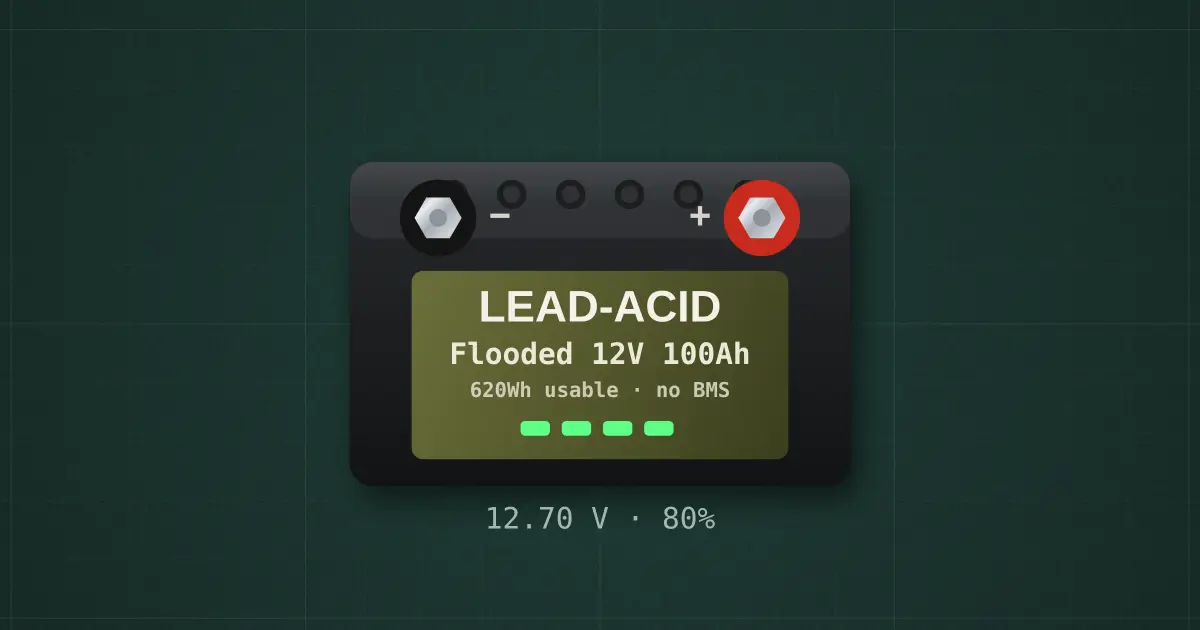
Try it on the benchThe lab drops it on an empty bench and opens its datasheet card.
Typical part: Lead-acid deep-cycle (flooded, AGM or gel), 12 V nominal
Pins
- −
- +
Ratings and limits
| Usable capacity | about 50 % of nameplate: 100 Ah → 50 Ah (LiFePO4: 80–90 %) |
|---|---|
| Charge profile | bulk → absorb 14.4–14.7 V → float 13.5–13.8 V, −3 to −5 mV/°C per cell (LiFePO4: CC/CV to 14.4 V, no float needed) |
| Round-trip efficiency | 80–85 % (LiFePO4 95 %+) |
| Peukert | capacity shrinks at high current: C/5 gives about 85 % of C20 |
| Cycle life | 300–500 cycles at 50 % DoD (LiFePO4: 3000+ at 80 %) |
| Cost per kWh per cycle | about 3–5 × LiFePO4 over its life, at a third of the upfront price |
| Weight | about 27 kg (LiFePO4 of the same Ah: 11 kg) |
| Gassing | flooded vents hydrogen above 14.7 V: ventilate, top up with distilled water; AGM and gel recombine most of it |
| Sulfation | left below 50 % it loses capacity by the day |
| Where it still wins | upfront cost, availability everywhere, standby and float duty (UPS, gensets), tolerance of a simple charger, mature recycling |
How to use it
Standby and float duty, budget off-grid where the bank can be oversized, starter and genset batteries. For daily cycling, size the bank at twice the usable Ah and expect to replace it in two to four years; a LiFePO4 bank costs more on the day and less per kWh over its life.
Lessons and builds that use it
- Lead-acid against LiFePO4: usable capacity, voltage and life
- Economics: payback, and what a battery really costs per kWh