ESP32-S3 DevKitC-1 (ESP32-S3-WROOM-1, ESP32-S3-WROOM-1-N8R8, SGM2212)
ESP32-S3-DevKitC-1 v1.1 · ESP32-S3-WROOM-1-N8R8 (8 MB flash, 8 MB octal PSRAM) · dual-core 240 MHz Xtensa LX7 · Wi-Fi 4 + Bluetooth LE 5 · 44 pins, 3.3 V logic · 5V → SGM2212 LDO · two Micro-USB: UART bridge + native USB
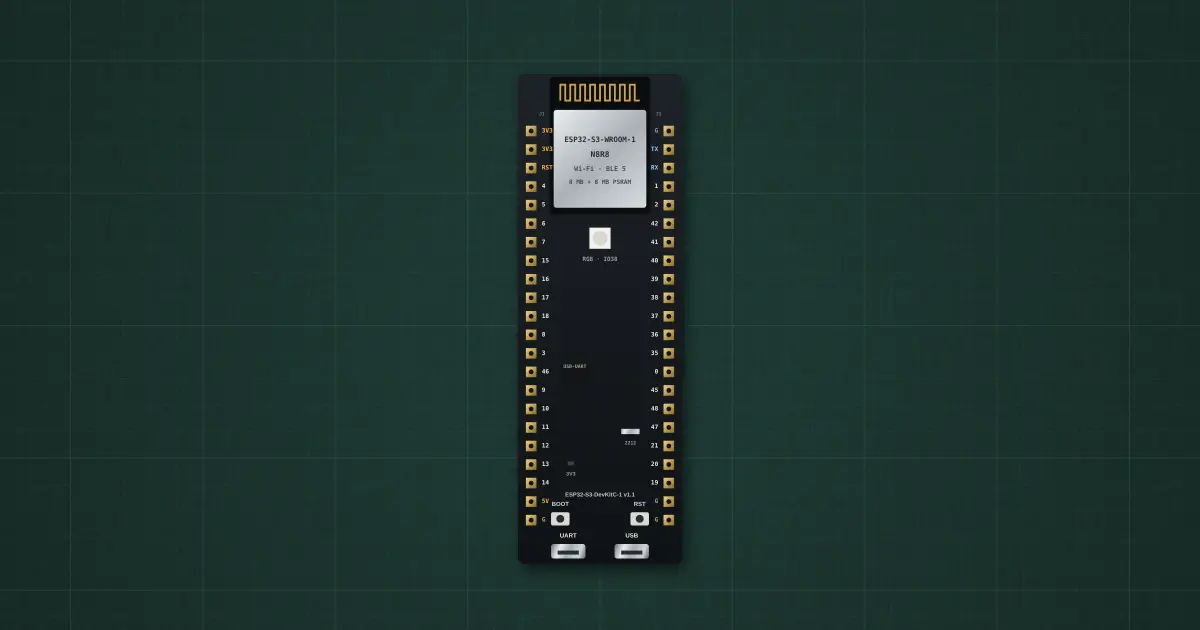
Try it on the benchThe lab drops it on an empty bench and opens its datasheet card.
Typical part: ESP32-S3-DevKitC-1 v1.1 (ESP32-S3-WROOM-1)
Pins
- RST (EN)
- GPIO4
- GPIO5
- GPIO6
- GPIO7
- GPIO15
- GPIO16
- GPIO17
- GPIO18
- GPIO8
- GPIO3
- GPIO46
- GPIO9
- GND
- 5V
- GPIO10
- GPIO11
- GPIO12
- GPIO13
- GPIO14
- TX (GPIO43)
- RX (GPIO44)
- GPIO1
- GPIO2
- GPIO42
- GPIO41
- GPIO40
- GPIO39
- GND
- 3V3
- Micro-USB "UART" port (USB-to-UART bridge → GPIO43/44)
- Micro-USB "USB" port (the ESP32-S3’s own USB: GPIO19 D−, GPIO20 D+)
- 3V3
- GND
- GND
- GPIO38
- GPIO37
- GPIO36
- GPIO35
- GPIO0
- GPIO45
- GPIO48
- GPIO47
- GPIO21
- GPIO20
- GPIO19
Ratings and limits
| Module | ESP32-S3-WROOM-1-N8R8: 8 MB flash, 8 MB octal (GPIO35–37 used inside) PSRAM · chip ESP32-S3R8 |
|---|---|
| Supply | one source at a time: either Micro-USB port, 5V pin, or 3V3 pin. 5V → SGM2212 LDO (800 mA, 2.7–20 V in). USB VBUS reaches 5V through diodes |
| Logic levels | 3.3 V; LOW below 0.25 × VDD, HIGH above 0.75 × VDD; 20 mA default drive, 40 mA at maximum drive. Not 5 V tolerant |
| ADC | 12-bit SAR; ADC1 GPIO1–10, ADC2 GPIO11–20 (ADC2 fails while Wi-Fi runs); 0–950 / 1250 / 1750 / 3100 mV at 0 / 2.5 / 6 / 12 dB |
| Touch | GPIO1–14 (T1–T14); the reading rises when touched |
| PWM (LEDC) | 8 channels, up to 14 bits, from the 80 MHz clock |
| No | DAC, Hall sensor, Bluetooth Classic (BluetoothSerial) |
| Strapping | GPIO0 (pull-up; low = download), GPIO46 (pull-down; must be low for download), GPIO45 (pull-down; high = 1.8 V flash: the WROOM-1 then cannot boot), GPIO3 (JTAG source) |
| USB | "UART" port: USB-to-UART bridge to GPIO43/44, auto-reset. "USB" port: the chip’s USB Serial/JTAG on GPIO19 (D−) / GPIO20 (D+) |
| RGB LED | WS2812 on GPIO38 (v1.1: GPIO38, v1.0: GPIO48) |
| Current | Wi-Fi TX peak 340 mA (802.11b +21 dBm), RX 88 mA, light sleep 380 µA, deep sleep 7–8 µA for the chip (the board’s LED, LDO and bridge add more) |
How to use it
A newer ESP32 with native USB, more GPIO (36 on the headers), vector instructions for AI/DSP, and Bluetooth LE 5. Moving a sketch from the classic ESP32: the pin numbers change (I²C 8/9, UART0 43/44, ADC1 GPIO1–10), there is no DAC, touch values go up instead of down, and Serial goes to the UART port unless “USB CDC On Boot” is enabled.
More in microcontrollers & modules
- Arduino Uno R3
- Arduino Nano
- ESP32 DevKit
- Raspberry Pi Pico 2
- LILYGO T-SIM A7670E R2
- Orange Pi One
- Coin acceptor
- Coin slot (₱5 only)
- I2C LCD
- MAX7219 8-digit display
Sources: Espressif ESP32-S3-DevKitC-1 v1.1 user guide; ESP32-S3 datasheet; ESP-IDF ADC and LEDC docs (ESP32-S3); Arduino-ESP32 core 3.x variant esp32s3; SG Micro SGM2212 product page